
Andhra Pickle vs North Indian Achaar — What is Actually Different
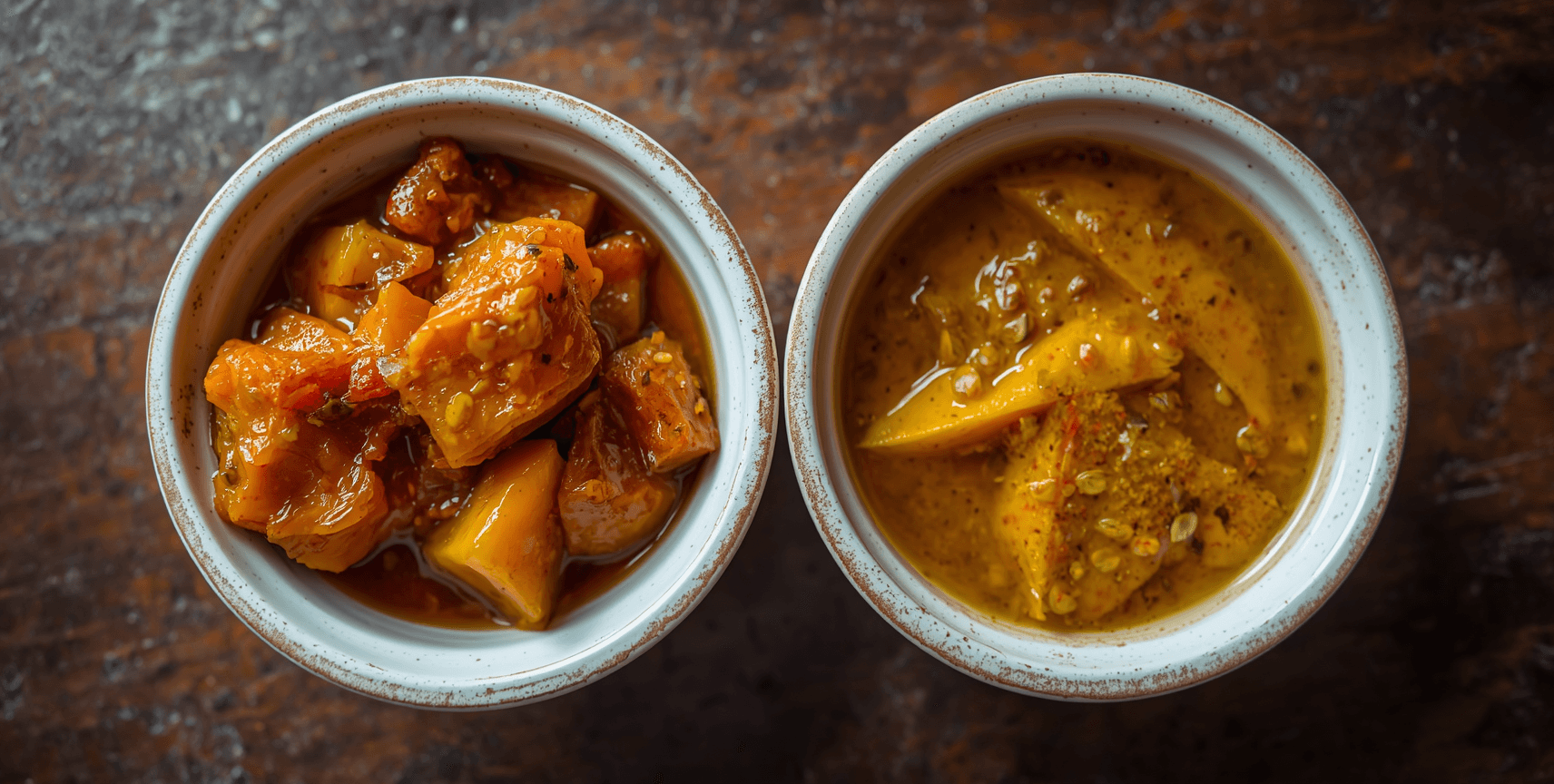
Ask most people what mango pickle is and they describe the jarred achaar from the supermarket — mustard oil base, moderate heat, sometimes slightly sweet. Andhra avakaya is something else. The differences between Andhra-style pickles and North Indian achaar are specific, consistent, and worth understanding before you buy.
The Oil
North Indian pickles use mustard oil — sharp, pungent and with its characteristic raw bite that softens with aging. Andhra pickles use sesame oil (nalla nune in Telugu), which is cold-pressed, darker and nuttier. Sesame oil has a stronger flavour that becomes part of the pickle rather than just a medium for the spices. When you open a jar of Andhra avakaya, the sesame oil smell is the first and most distinctive thing about it.
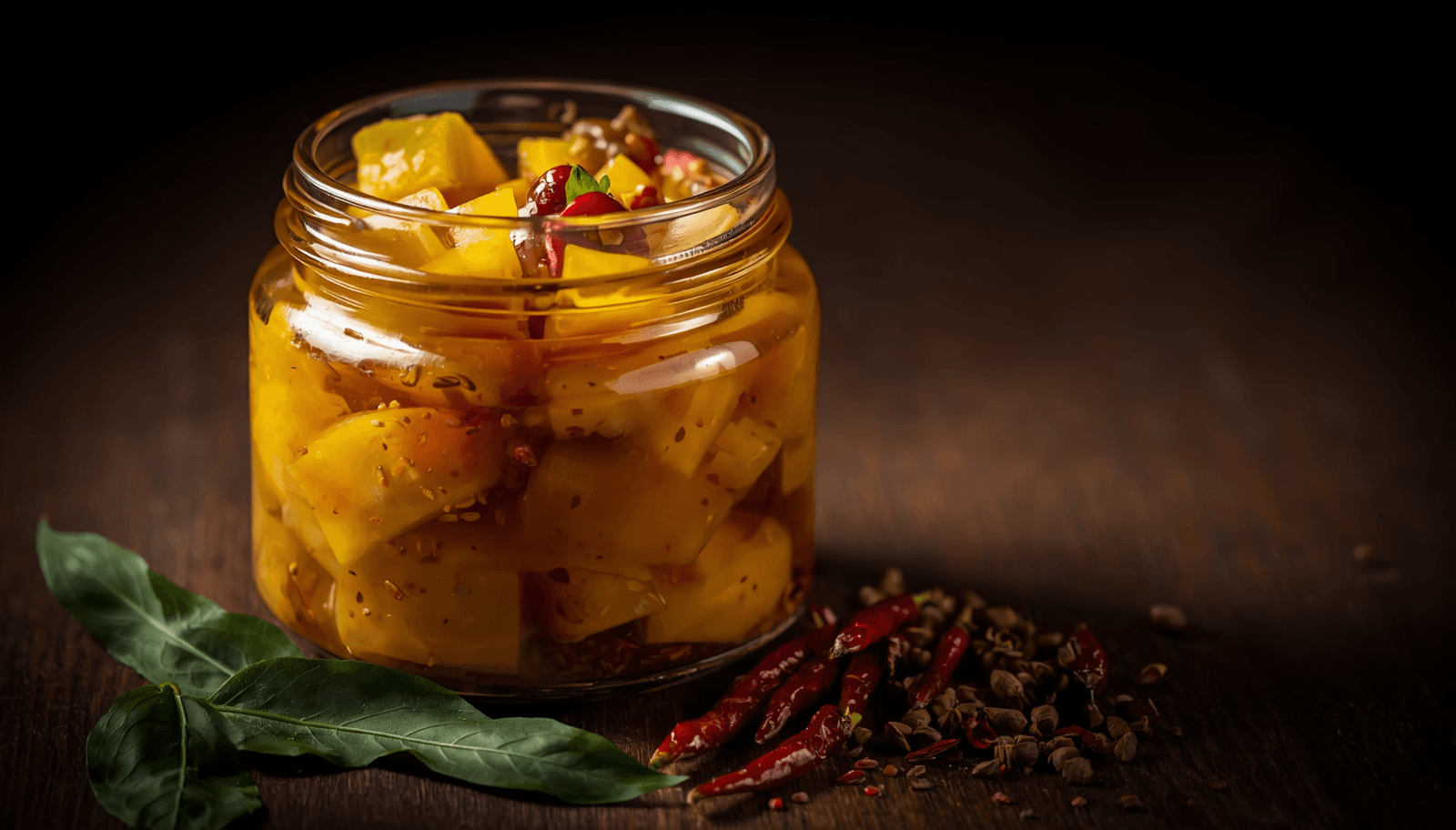
Open glass jar of Andhra mango pickle showing chunky pieces, thick red sesame oil masala and whole spices
This is not a minor difference. The oil is present in every mouthful and it changes the entire character of the pickle. Andhra pickle tastes nutty and rich. North Indian pickle tastes sharp and pungent. Neither is better — they are genuinely different eating experiences.
The Chilli
North Indian achaar uses Kashmiri chilli for colour and Deggi mirch for moderate, building heat — both give a bright red colour with a gentler spice profile. Andhra pickles use Guntur chilli, grown in Guntur district. Guntur chilli has a sharper, more direct heat that arrives quickly and builds. The colour from Guntur chilli is a deeper, darker red than Kashmiri.
Andhra pickles are structurally hotter than North Indian ones. This is not individual variation or bad batches — it is the chilli. If you are buying Andhra avakaya for the first time and you are used to North Indian pickle, start with a smaller amount than you think you need.
The Texture
North Indian mango pickles tend to have smaller, more uniform pieces in a saucy, spreadable masala base. Andhra avakaya uses large chunks of raw mango — sometimes with the seed piece still included. The masala is dry and clings to each piece rather than forming a pourable sauce. You scoop a piece of mango, not a spoonful of sauce.
This means Andhra avakaya and North Indian achaar are used differently. Avakaya is mixed into rice directly — a piece broken apart and mixed through. North Indian achaar is more likely to be spooned onto the side of a thali as a condiment. Both are correct uses within their own food traditions.
Andhra Pickles That Have No North Indian Equivalent
Gongura pickle is made from sorrel leaves (gongura in Telugu) — a sour, leafy green that grows specifically in Andhra and coastal Odisha. There is no North Indian equivalent. Gongura has a tartness that is different from mango sourness or lime sourness — it is more complex and less sharp. Gongura pickle is one of the most searched Andhra foods outside Andhra.
Andhra garlic pickle uses whole garlic cloves in sesame oil with Guntur chilli — deeper and more direct than the garlic notes you find in North Indian mixed achaar. Dahi mirchi pickle (pickled curd chillies) is another Andhra preparation that has no North Indian parallel — fresh chillies stuffed with spiced curd mixture and sun-dried.
Frequently Asked Questions
Is Andhra pickle hotter than North Indian pickle?
Yes, structurally. Andhra pickles use Guntur chilli which has a sharper, more direct heat than Kashmiri or Deggi mirch used in most North Indian achaar. This is consistent across all Andhra pickle varieties, not just the spicy ones.
What oil is used in Andhra pickles?
Cold-pressed sesame oil (nalla nune). North Indian pickles typically use mustard oil. The difference in oil creates a fundamentally different flavour profile.
What is gongura?
Gongura is a sour leafy green (Hibiscus cannabinus, also called sorrel or kenaf) that grows in Andhra Pradesh and coastal Odisha. It is the base of gongura pickle and gongura chutney. There is no North Indian equivalent — the sour, complex flavour of gongura is specific to Andhra cuisine.
Can I substitute North Indian pickle with Andhra pickle in recipes?
In most uses, yes. For rice mixing (with curd rice or plain rice), Andhra avakaya works the same way as North Indian mango achaar. Be aware that the heat level will be higher and the flavour will be sesame-forward rather than mustard-forward.
Shop Related Products
Delivery available in: