
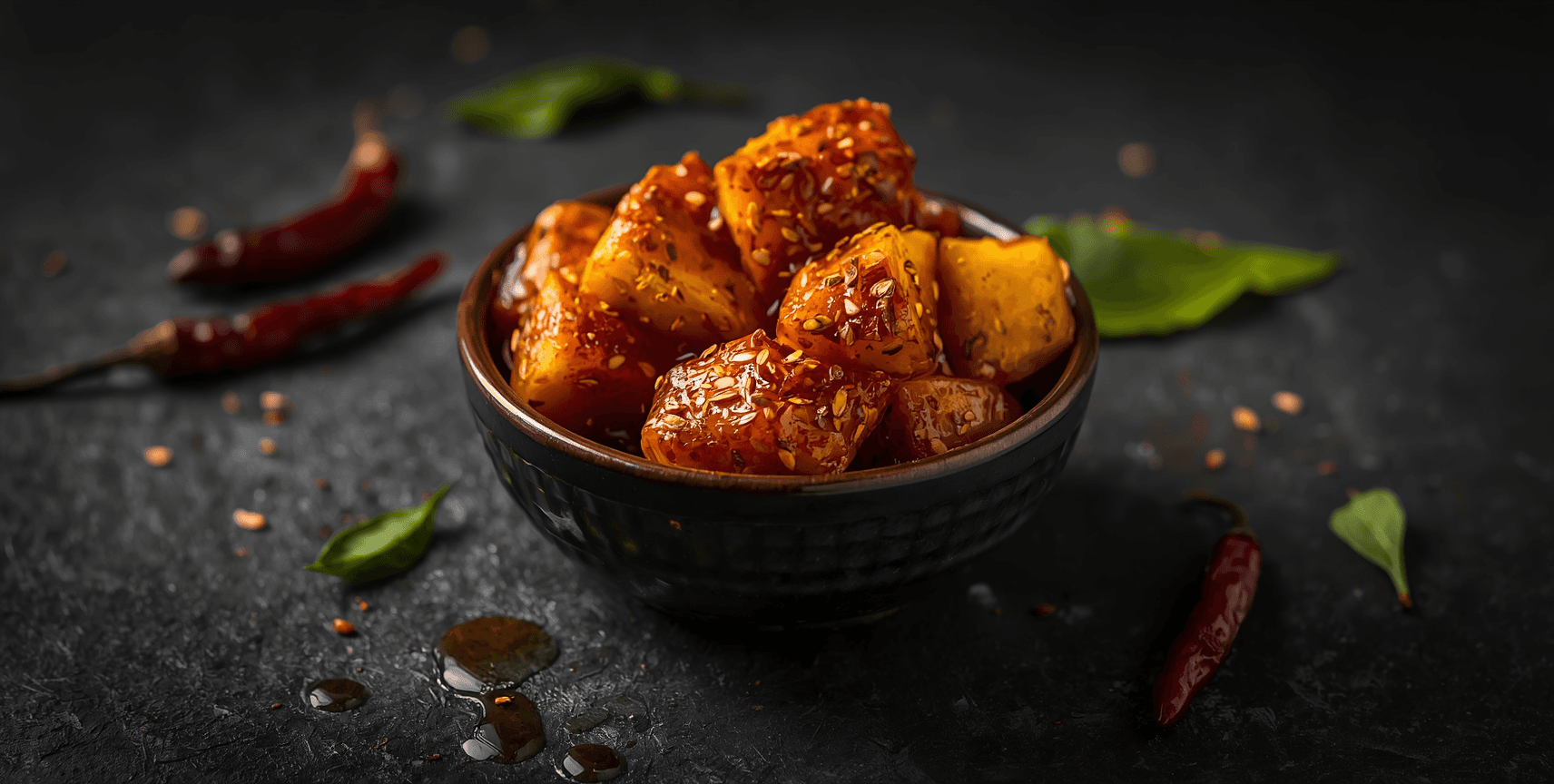
What is Avakaya? The Story Behind Andhra's Most Famous Pickle
Avakaya is the pickle that defines Andhra Pradesh. Before any other dish, before any other preparation, ask someone from Andhra what food means to them and the word avakaya comes up. It is a raw mango pickle made with Guntur chilli powder, mustard seeds, fenugreek and sesame oil — and in its simplest form, it has been made the same way for centuries.
Read article →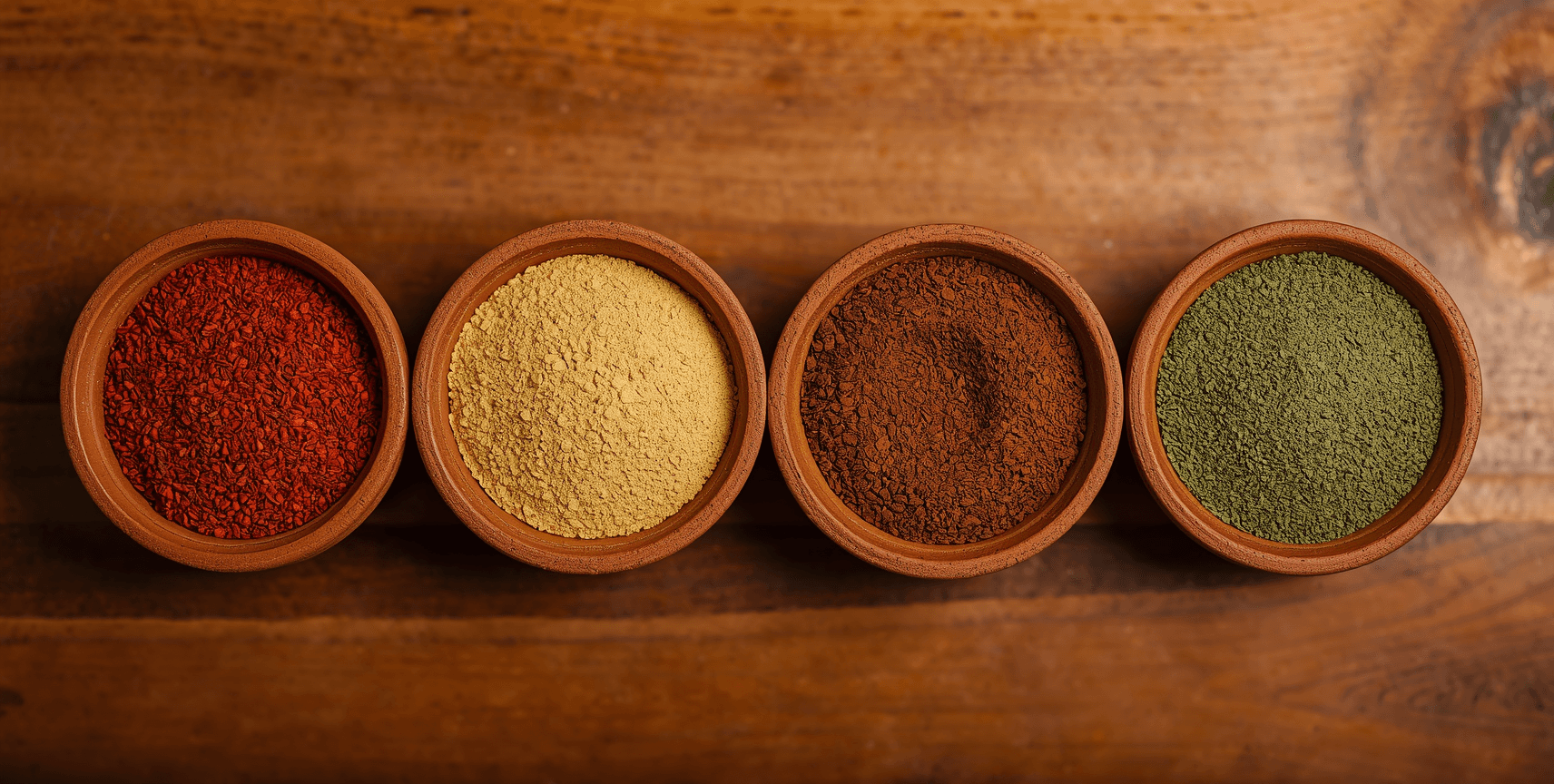
Podi — The Andhra Dry Spice Mix and How to Use It
Podi is the dry spice mix that sits on every Andhra dining table alongside the pickle jar. If you have eaten at a South Indian restaurant and had something dark and spicy sprinkled on your idli or dosa, that was podi. But the home versions made in Andhra — kandi podi, nala karam, nuvvula podi — are different from restaurant versions and very different from each other.
Read article →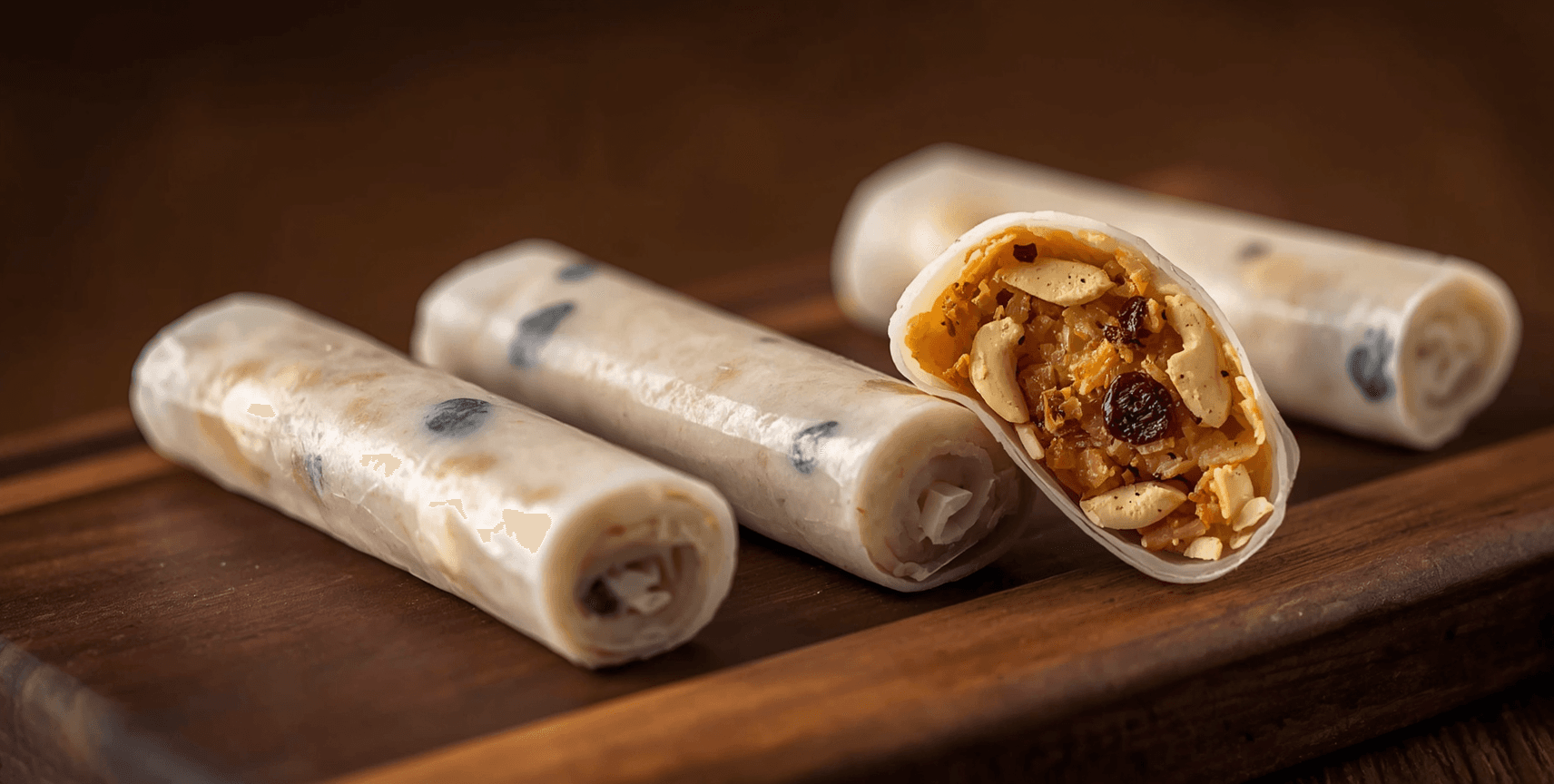
Pootharekulu: The Paper Sweet from Atreyapuram That Has a GI Tag
Pootharekulu is arguably the most technically demanding sweet in Indian cuisine. It is made from paper-thin sheets of rice starch — so thin they are translucent — layered with powdered jaggery, ghee and dry fruits, then rolled into cylinders. It has been made exclusively in Atreyapuram village in East Godavari for over two centuries and now carries a GI tag that legally protects that origin.
Read article →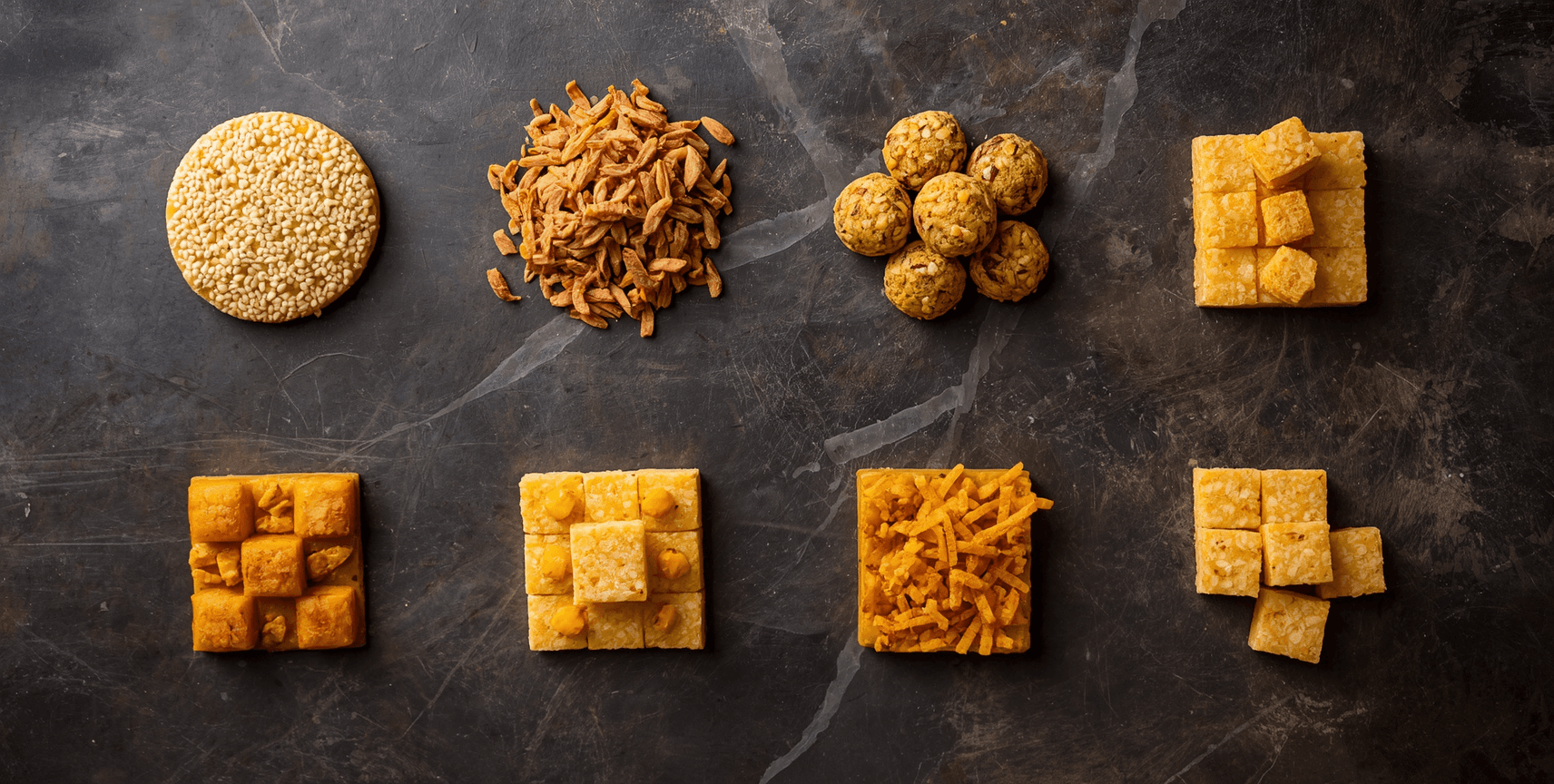
Andhra Sweets Guide — What Each One Is and What Makes It Different
Andhra Pradesh has a distinct sweet tradition that is separate from North Indian mithai and from Tamil Nadu sweets. Andhra sweets tend to use jaggery rather than refined sugar, are often rice or dal based, and have a strong connection to specific festivals and seasons. Here is a practical guide to the main Andhra sweets.
Read article →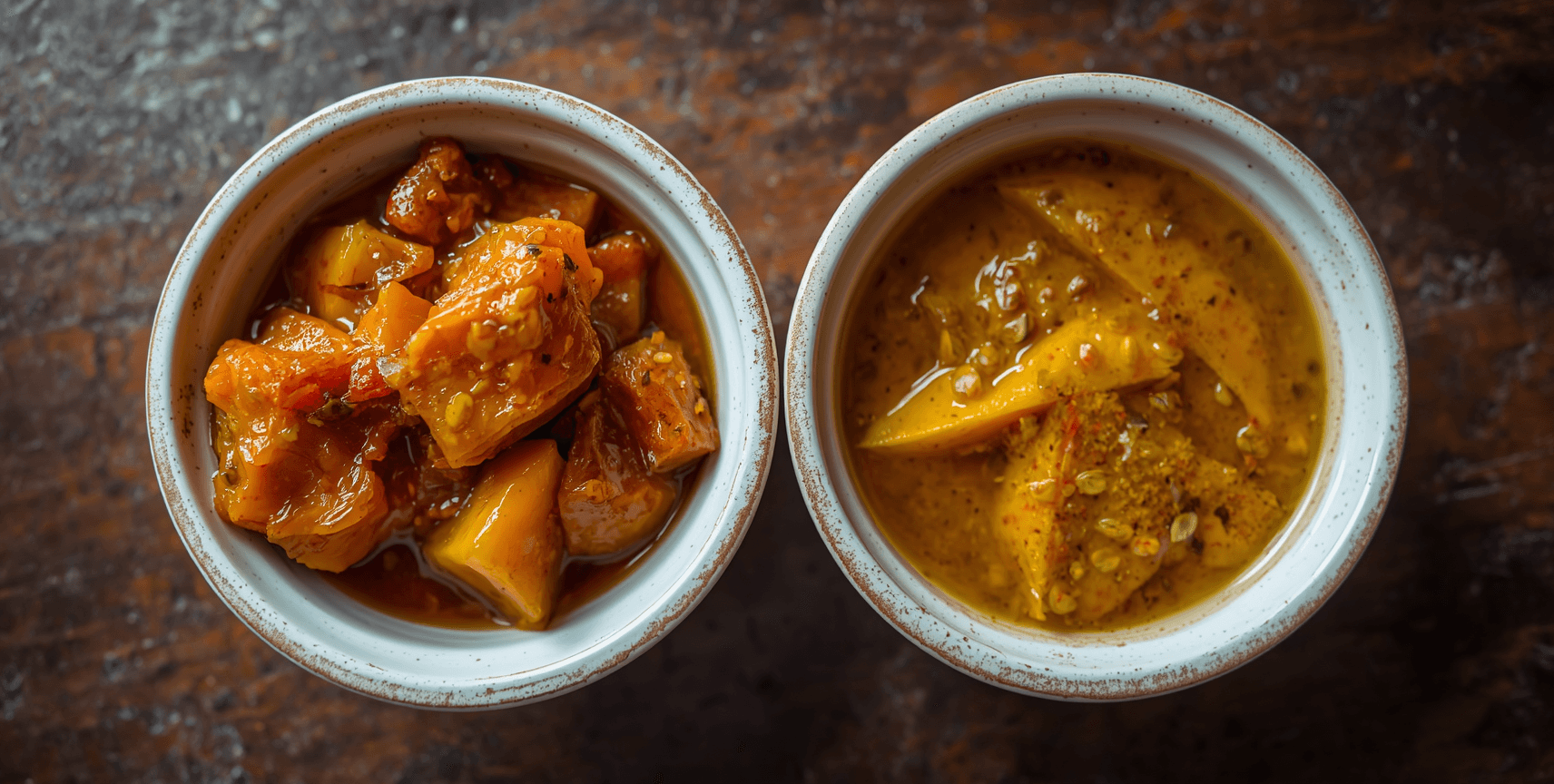
Andhra Pickle vs North Indian Achaar — What is Actually Different
Ask most people what mango pickle is and they describe the jarred achaar from the supermarket — mustard oil base, moderate heat, sometimes slightly sweet. Andhra avakaya is something else. The differences between Andhra-style pickles and North Indian achaar are specific, consistent, and worth understanding before you buy.
Read article →