
Pootharekulu: The Paper Sweet from Atreyapuram That Has a GI Tag
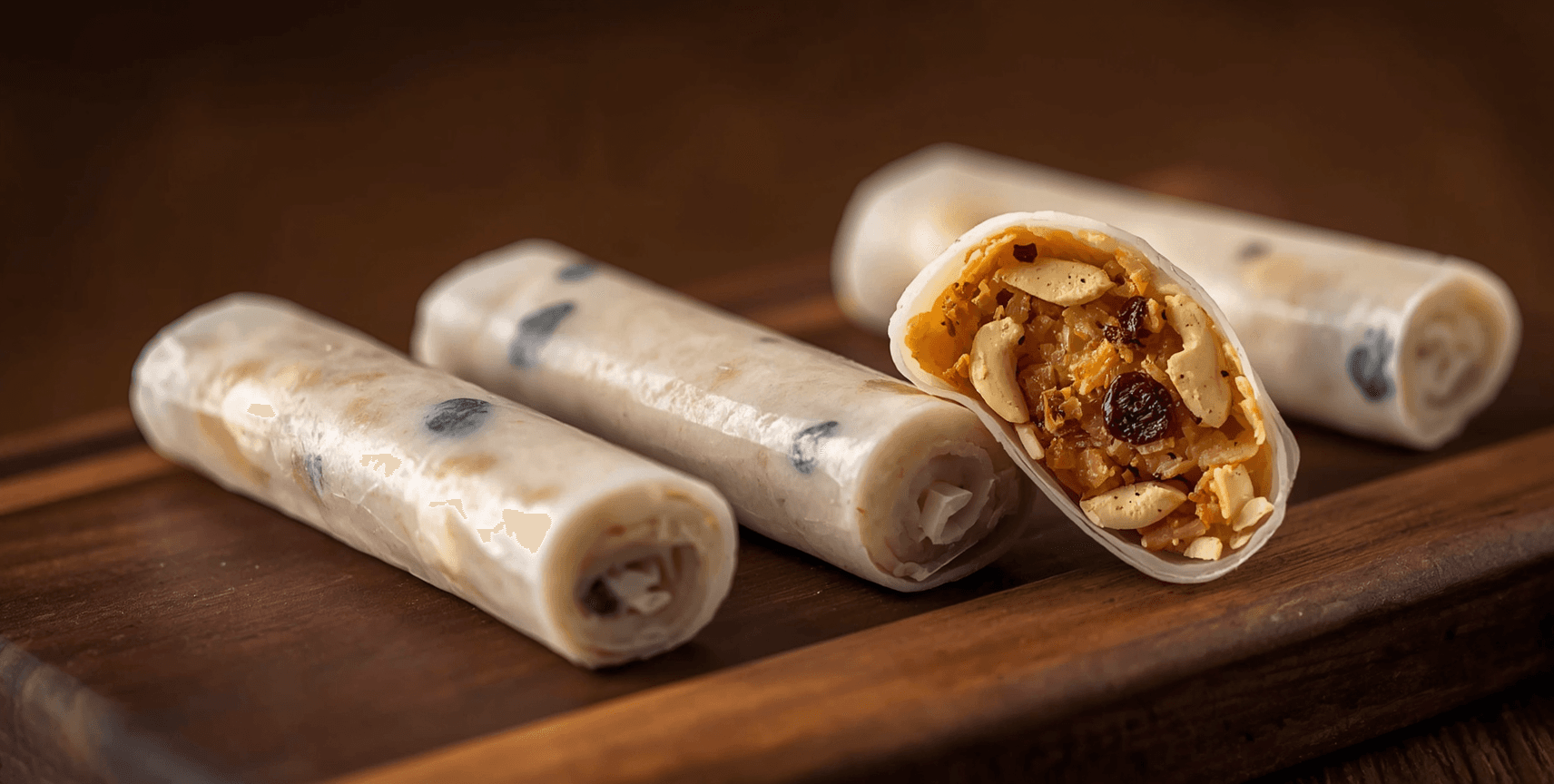
Pootharekulu is arguably the most technically demanding sweet in Indian cuisine. It is made from paper-thin sheets of rice starch — so thin they are translucent — layered with powdered jaggery, ghee and dry fruits, then rolled into cylinders. It has been made exclusively in Atreyapuram village in East Godavari for over two centuries and now carries a GI tag that legally protects that origin.
What Does Pootharekulu Mean?
Pootharekulu literally means coated sheets in Telugu. Pootha means coating or wrap, rekulu means sheets. The name describes the technique exactly: ultra-thin sheets of rice starch are made and wrapped around a filling. Each finished roll contains multiple layers of these sheets — you can see through the outermost one before you eat it.
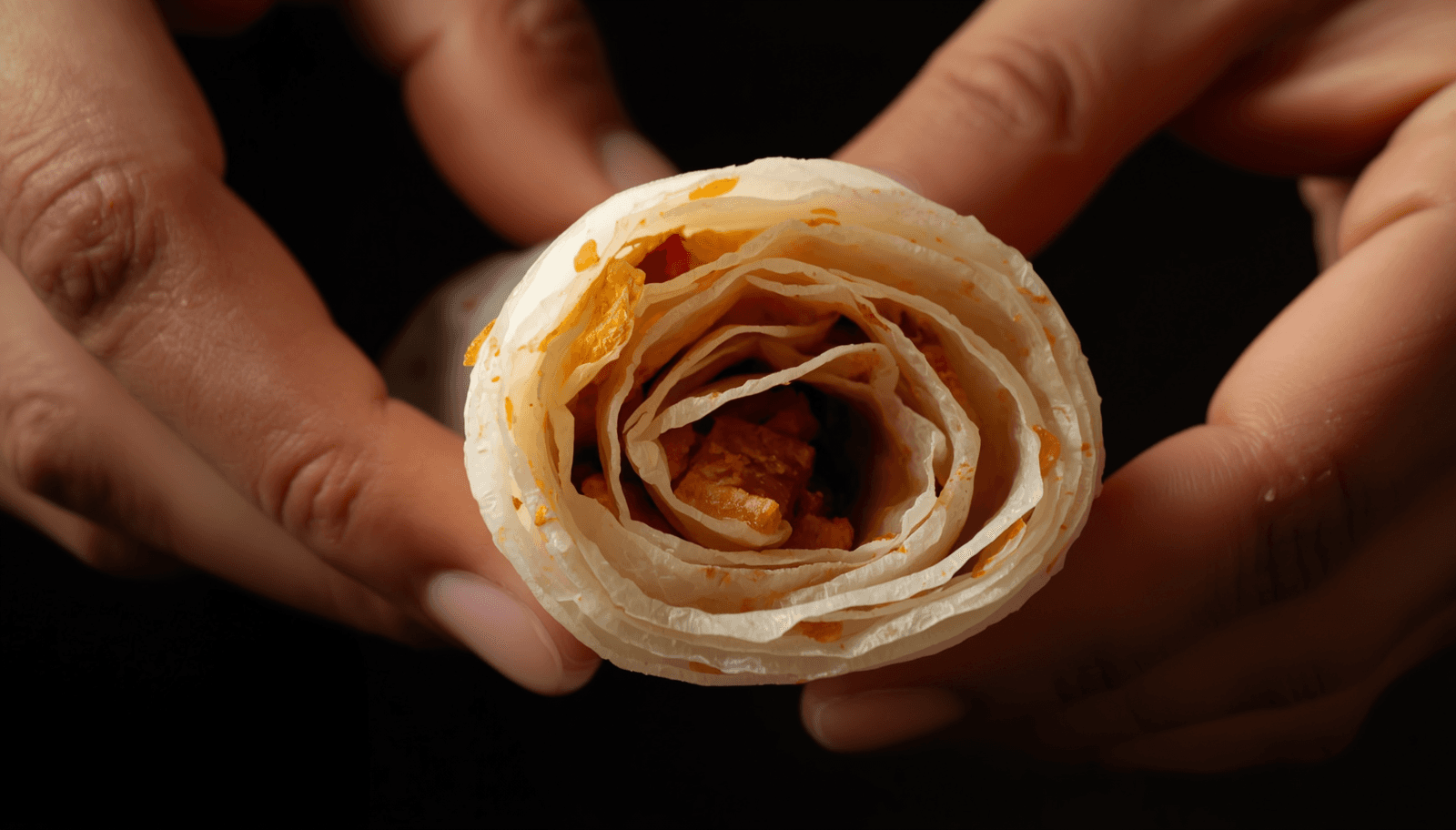
Hands unrolling a pootharekulu to reveal delicate translucent rice starch layers and dry fruit filling
How Pootharekulu is Made
Rice is soaked, ground into a fine paste and cooked with water into a thin starch mixture. This starch is spread as a very thin layer onto the outer surface of a heated earthen pot. Within seconds it dries into a translucent film. This film is carefully peeled off and placed flat — the entire sheet is roughly the size of a dinner plate and less than a millimetre thick.
The sheet is dusted with powdered jaggery, brushed with ghee, and scattered with dry fruits. Another sheet goes on top, and the process repeats. Once several layers have been built up, the stack is rolled into a cylinder and sealed with ghee. A finished pootharekulu roll is white on the outside, with the jaggery and dry fruits visible as shadows through the translucent sheets.
Why Atreyapuram and Nowhere Else?
The GI tag for Atreyapuram pootharekulu recognises that the specific combination of local water, the traditional technique passed down through families in Atreyapuram, and the specific short-grain rice variety used there produces sheets of a quality that cannot be replicated elsewhere. The water mineral content affects the starch consistency. The earthen pots used are specific to this region. The technique itself — the speed and confidence with which makers spread the starch and peel the sheet — is developed over years of practice.
GI tags are legal protections under Indian law. The name Atreyapuram Pootharekulu cannot be used for products made anywhere else. This means if you see pootharekulu labelled as being from Atreyapuram, the claim is protected and verifiable. Pootharekulu made in Hyderabad or Bangalore and labelled Atreyapuram-style would be a false claim.
How to Store and Eat Pootharekulu
Pootharekulu are fragile. The rice paper sheets crack if mishandled, which is why they need specific packaging for shipping. Store in a cool, dry place — not refrigerated, because the cold makes the sheets more brittle. Shelf life is about a week at room temperature and two weeks refrigerated. Bring to room temperature before eating.
The flavour is delicate: mild rice starch, sweet jaggery and ghee, crunchy dry fruits in the middle. It melts quickly — the starch dissolves as soon as it touches the tongue. One roll is satisfying and two is enough. It is not a heavy sweet; it is a refined one.
Frequently Asked Questions
What is pootharekulu made of?
Rice starch sheets made from ground rice paste, layered with powdered jaggery, ghee and dry fruits (cashews, almonds, raisins). No refined sugar, no artificial flavouring.
Why does pootharekulu have a GI tag?
The GI tag protects Atreyapuram pootharekulu as a geographically specific product. The quality of the rice starch sheets depends on the local water, the specific rice variety and the traditional technique — none of which can be genuinely replicated elsewhere.
How long does pootharekulu last?
About 1 week at room temperature and 2 weeks refrigerated. Handle carefully — the rice paper sheets are fragile and crack if bent or pressed.
Shop Related Products
Delivery available in: