
What is Avakaya? The Story Behind Andhra's Most Famous Pickle
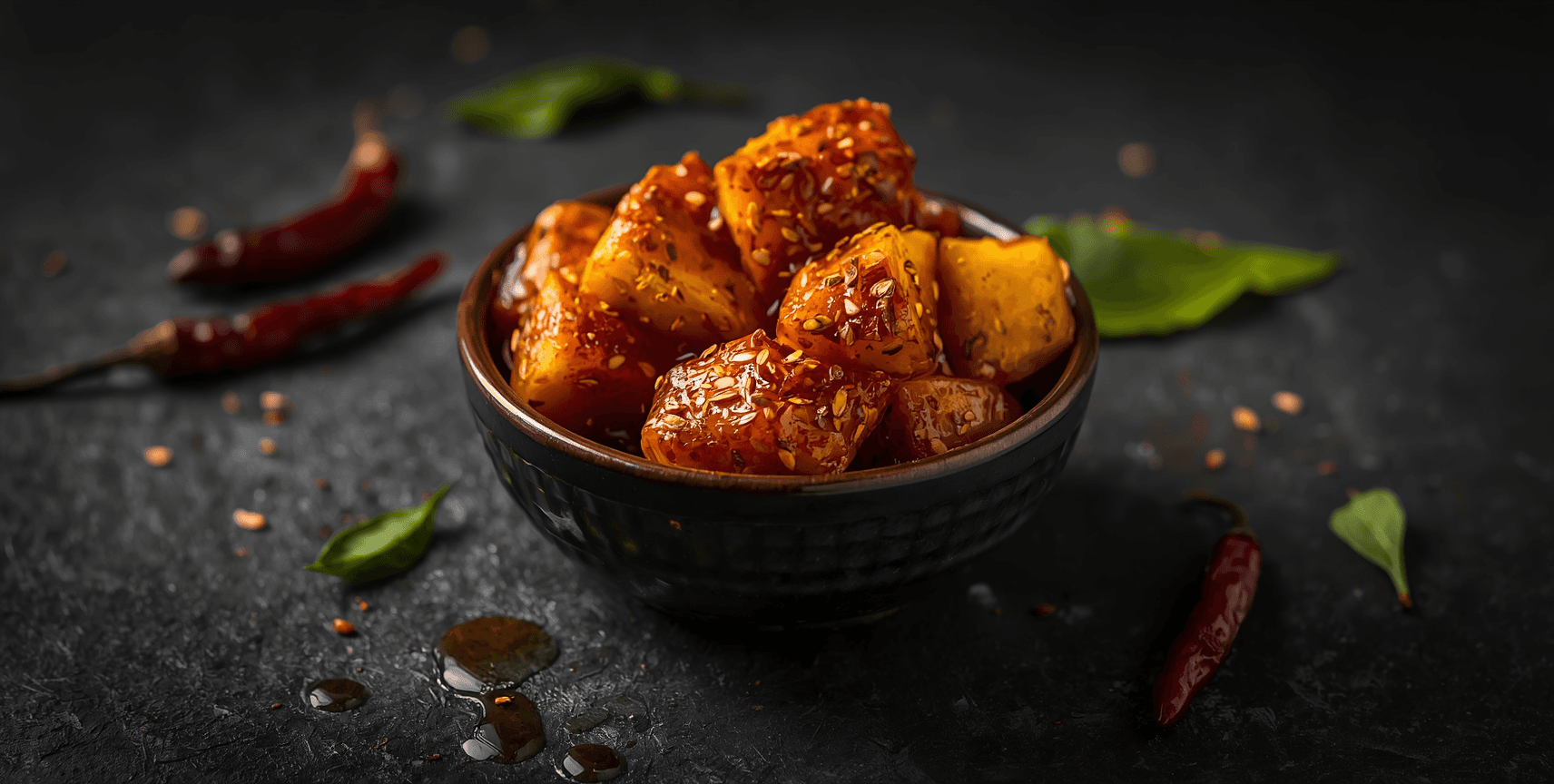
Avakaya is the pickle that defines Andhra Pradesh. Before any other dish, before any other preparation, ask someone from Andhra what food means to them and the word avakaya comes up. It is a raw mango pickle made with Guntur chilli powder, mustard seeds, fenugreek and sesame oil — and in its simplest form, it has been made the same way for centuries.
What Makes Avakaya Different from Other Mango Pickles
North Indian mango pickle uses mustard oil and sometimes vinegar or brine as a preservative base. Andhra avakaya uses cold-pressed sesame oil — darker, nuttier and with a flavour strong enough to become part of the pickle rather than just a medium for the spices. The chilli is specifically Guntur red chilli, grown in Guntur district of Andhra Pradesh, which has a sharper and more direct heat than Kashmiri chilli.
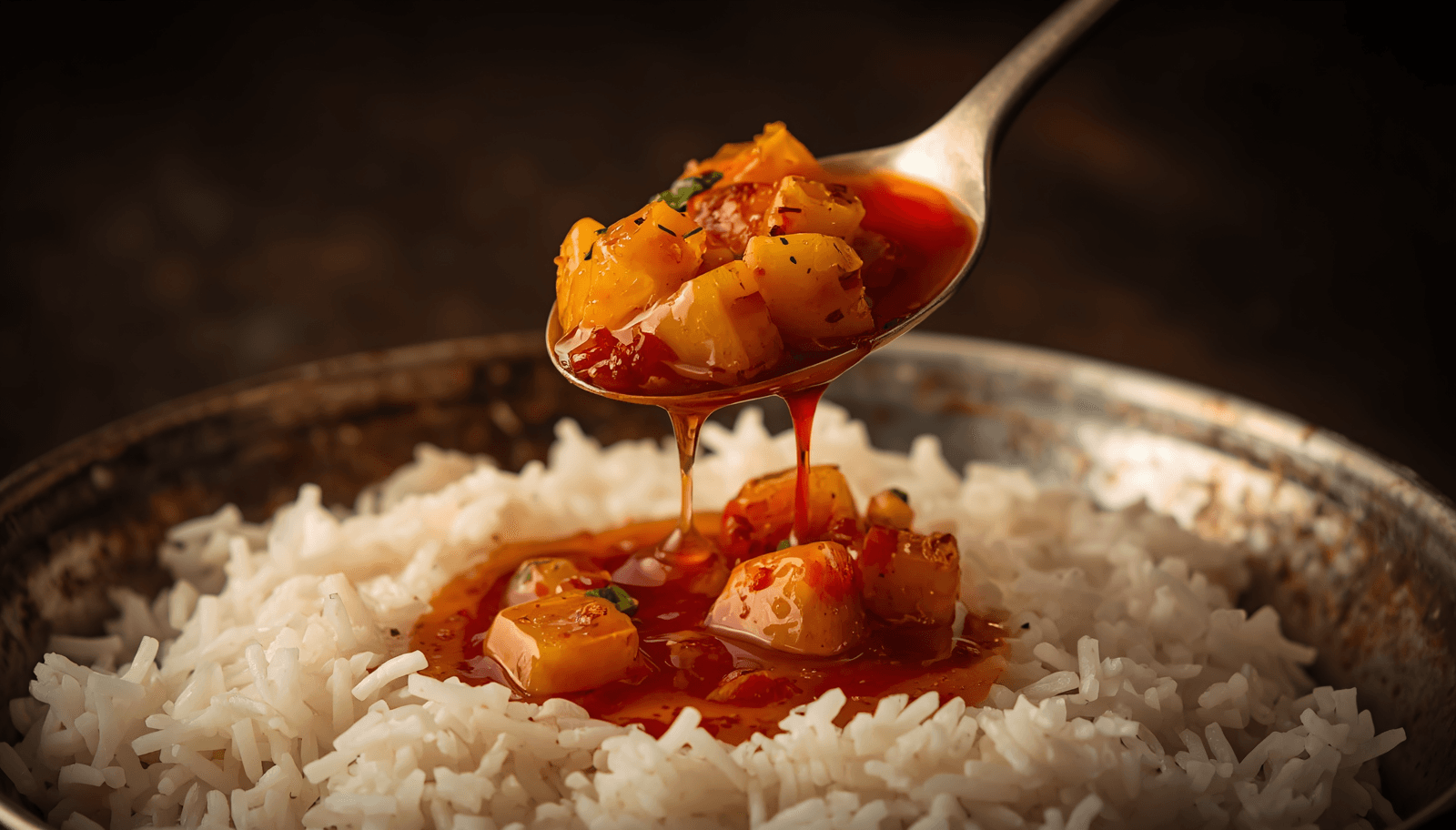
Avakaya mango pickle being served over curd rice — deep red chilli oil dripping from spoon
The combination of raw mango's sourness, Guntur chilli's direct heat and sesame oil's nuttiness creates something that no other regional mango pickle replicates. There is no vinegar. No sugar. No stabilisers. Just the natural acidity of the mango, the heat of the chilli, and the oil that preserves everything.
How Avakaya is Made
Raw mangoes are sourced in April and May when they are fully developed but still hard and completely unripe. The mangoes are washed, dried completely, and cut into large pieces — sometimes with the seed still attached. The seed piece is considered the best piece because the mango flavour concentrates there.
The masala is made from Guntur chilli powder, coarsely ground mustard seeds, salt and fenugreek. Everything is mixed with sesame oil and packed into ceramic jars. The pickle is left to cure for at least 10 to 15 days before eating. During this time the mango softens slightly, the masala infuses into each piece, and the oil absorbs the mango's natural acid.
How to Eat Avakaya
Avakaya is not a condiment in the North Indian sense — a small chutney spooned on the side. In Andhra, it is a main component of the meal. A small piece of avakaya is mixed directly into hot rice with a spoonful of ghee — the heat of the rice releases the sesame oil and chilli aroma. This is called avakaya annam (avakaya rice) and it is a complete meal on its own.
Avakaya is also eaten with curd rice (perugu annam), where the cooling sourness of the curd balances the heat of the pickle. One piece of avakaya, one bowl of curd rice — this combination appears at the end of every Andhra meal. It is how the meal ends, not how it begins.
What to Look for When Buying Avakaya
The oil should be sesame-based — not sunflower or refined vegetable oil. The mango pieces should be chunky, not minced or shredded. The colour should be a deep red-orange from real Guntur chilli, not a bright artificial red. There should be no vinegar in the ingredients list.
Real avakaya keeps for 6 to 12 months at room temperature in a sealed jar because the salt, oil and the mango's own natural acid act as preservatives. If a jar says it only lasts 3 months, the salt and oil ratio is probably off.
Frequently Asked Questions
What is avakaya made of?
Raw mango, Guntur chilli powder, coarsely ground mustard seeds, fenugreek, salt and cold-pressed sesame oil. No vinegar, no refined oil, no sugar.
How long does avakaya last?
6 to 12 months in a sealed jar at room temperature. Longer if refrigerated. The salt and oil ratio determines shelf life — properly made avakaya does not need refrigeration.
Is avakaya the same as mango pickle?
Avakaya is a specific type of mango pickle from Andhra Pradesh. It is different from North Indian mango achaar in the oil used (sesame vs mustard), the chilli (Guntur vs Kashmiri), the texture (chunky vs finer) and the absence of vinegar.
Shop Related Products
Delivery available in: